
Latest Version
October 08, 2024
HOMA GAMES
Action
iOS
0
Report a Problem
More About :game
What happens when humans invade the territory of a giant spider?
In The Spider Nest: Eat the World, you don't play as the hero trying to survive the monster. You are the monster.
You take control of a powerful spider queen living in a countryside nest. Humans have entered your territory, and your objective is to drive them away while building a growing spider colony.
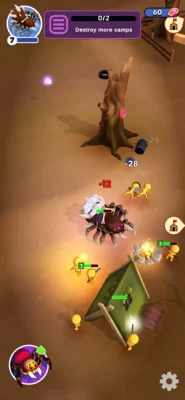
The game mixes action combat, exploration, resource gathering, nest defense and creature evolution. You hunt human invaders, capture their bodies in webs, bring them back to your lair and use them as food for your growing spider population.
As your colony becomes larger, however, the humans become more dangerous. They return with stronger weapons, creating a constant battle between your expanding spider army and the forces trying to destroy your nest.
Game Story
The countryside looks peaceful until humans begin entering your territory.
Hidden beneath the surface is a growing spider colony controlled by a powerful queen. Your nest contains eggs and young spiders that depend on you for food and protection.
Humans aren't simply passing through. They are attacking your territory and threatening the future of your colony.
Your mission is to fight back.
Hunt the invaders, capture their bodies, feed your offspring and develop a stronger spider army capable of defending the nest.
The larger your colony becomes, the more dangerous the humans become, turning the game into a constant struggle for territory and survival.
Core Gameplay
The Spider Nest combines several gameplay systems into one unusual experience:
- Giant spider combat
- Human hunting
- Web traps
- Cocooning defeated enemies
- Resource collection
- Spider egg production
- Feeding spiderlings
- Spider evolution
- Colony development
- Nest defense
- Exploration
- Boss encounters
- Enemy waves
The central gameplay loop is:
Hunt → Capture → Feed → Grow → Evolve → Defend → Explore → Repeat
Play as the Spider Queen
The game's biggest attraction is its perspective.
Instead of fighting against spiders, you become the giant predator.
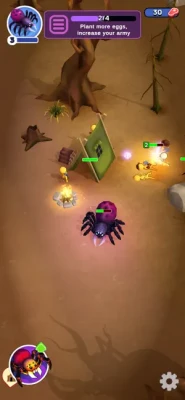
Your spider queen can move through the environment, hunt human enemies and defend the territory surrounding the nest.
This creates a very different experience from conventional survival games because the player is effectively controlling the creature that would normally be the threat.
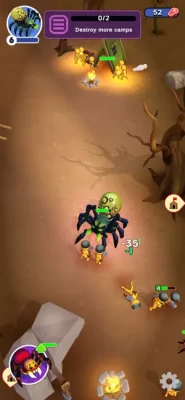
Hunt Human Invaders
Humans are the primary enemies.
They enter your territory with increasingly powerful weapons, forcing you to become stronger as your colony grows.
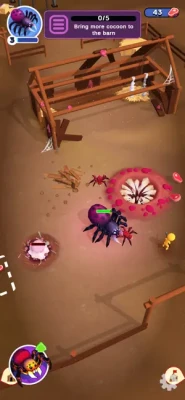
Rather than simply defeating enemies and leaving them behind, the game gives their bodies a practical purpose: defeated humans can be wrapped in cocoons and transported back to the lair as food for the colony.
This makes hunting directly connected to your colony's survival.
Web Traps
Webs are an important defensive and offensive tool.
You can use webs to slow or trap human invaders around your territory, giving your spider queen and colony more time to respond.
Web-based defense becomes particularly important when humans attack the nest while you are trying to explore the surrounding environment.
Cocoon and Feed System
One of the game's defining mechanics is the ability to wrap defeated prey in spider silk.
After capturing an enemy, you can transport the cocoon back to the lair barn and use it to provide food for your spiderlings.
This turns combat rewards into a resource for colony development rather than simply a score or currency.
Build a Spider Army
Your spider colony isn't just decoration.
You can hatch eggs and feed young spiders so they develop into stronger warriors capable of defending the nest.
As the colony grows, your goal becomes maintaining enough food and strength to keep your spiders alive while protecting the eggs from human attacks.
The game therefore combines spider evolution with colony management.
Evolve Your Spiders
Evolution is an important part of progression.
Spiderlings can become stronger warriors as they receive food and development resources. The game also includes mutagen-based progression that can further strengthen your spiders.
The result is a progression system in which your colony gradually becomes more capable of handling increasingly dangerous enemies.
Protect the Nest
Your nest is the heart of the colony.
While you are exploring or hunting away from home, human attackers can attempt to reach the nest and destroy your eggs and spiders.
This creates an important strategic problem: how far can you explore before you need to return and defend your colony?
The App Store's player reviews specifically highlight nest defense as one of the game's central challenges, with some players saying attacks can make exploration difficult.
Explore the World
The game isn't restricted to the immediate area around your nest.
Exploration allows you to search the surrounding environment, encounter enemies and gather resources.
Going farther from your nest can provide opportunities for greater rewards, but it also increases the risk of returning too late to protect your colony.
This creates a risk-versus-reward element that encourages players to carefully manage their time and resources.
Scorpion Update
The current App Store version history includes a major update introducing scorpions.
The update adds a new zone, monster encounters and a scorpion boss. Players can also recruit scorpions to strengthen their colony. The update also expanded the game's language availability by 13 additional languages.
This gives the game another layer beyond its original human-versus-spider conflict.
Boss Battles
Boss encounters provide some of the toughest challenges.
The scorpion update, for example, introduces a powerful scorpion boss that must be defeated before players can take advantage of the new scorpion-related content.
Boss fights require stronger spiders and better preparation than ordinary encounters.
Resources and Progression
Several resources contribute to colony development.
Players need to balance:
- Food
- Human bodies
- Eggs
- Spiderlings
- Mutagens
- Health resources
- Evolution progress
- Nest protection
Managing these resources becomes increasingly important as the colony expands.
Health and Healing
The game includes health management for spiders.
The App Store's version history notes the addition of health potions that can be collected to save injured spiders, giving players another resource to manage during progression.
This adds another layer of resource planning, particularly during difficult encounters.
Spider Types and Abilities
The game features evolving spiders with different combat characteristics.
Player feedback has specifically referred to poison spiders and spider leveling, while gameplay descriptions also highlight the development of young spiders into warriors.
As your colony grows, developing stronger spider units becomes increasingly important for both exploration and defense.
How to Play The Spider Nest
1. Protect Your Nest
Your eggs and young spiders are your most important assets. Don't leave them exposed to enemy attacks.
2. Hunt Nearby Enemies
Start by eliminating human invaders close to your territory.
3. Collect Prey
Wrap defeated humans in cocoons and transport them back to your lair.
4. Feed Your Spiderlings
Use available food resources to help your young spiders grow into stronger warriors.
5. Develop Your Colony
Invest resources into improving your spider population and strengthening the nest.
6. Use Webs Strategically
Webs can help control enemy movement and protect important areas.
7. Explore Carefully
The farther you travel, the greater the risk of leaving your nest vulnerable.
8. Prepare for Stronger Enemies
As your colony grows, expect humans to become more heavily armed.
9. Evolve Your Spiders
Use available progression resources to increase the strength of your colony.
10. Defeat Bosses
Upgrade your spiders and prepare before entering areas containing powerful bosses.
Beginner's Guide
Stay Close to the Nest at First
Don't immediately explore every available area. Learn how the nest defense system works before traveling too far.
Keep Food Available
Your colony depends on resources. Hunting is therefore not optional—it is part of maintaining your spider population.
Protect the Eggs
Your eggs represent future members of the colony. Losing them can slow your progression.
Build a Strong Defense
A growing colony attracts stronger attacks. Don't focus entirely on exploration while ignoring your home base.
Upgrade Regularly
Use available resources to strengthen your spider queen and colony rather than allowing resources to accumulate without purpose.
Advanced Strategy Tips
Balance Exploration and Defense
The biggest strategic mistake is treating exploration and nest defense as separate activities.
Every trip away from the nest creates an opportunity for enemies to attack your colony.
Plan your exploration around your ability to return quickly.
Hunt Efficiently
Choose targets that provide useful resources without exposing your spider queen to unnecessary danger.
Use the Environment
Webs and positioning can make a major difference when dealing with groups of enemies.
Prioritize Colony Growth
A stronger spider army can reduce the pressure placed on your spider queen and provide additional protection.
Save Healing Resources
Health potions can be particularly valuable during difficult encounters, so avoid wasting them unnecessarily.
Prepare for Boss Areas
Don't enter a new high-risk zone with an underdeveloped colony. Strengthen your spiders before taking on major enemies.
Difficulty
The game starts with relatively accessible mechanics, but the challenge increases as your colony becomes larger.
This is partly because stronger enemies appear as the spider population develops. The App Store description specifically warns that a larger colony attracts humans carrying more powerful weapons.
Player reviews have also discussed balancing problems, frequent nest attacks and the difficulty of maintaining the colony while exploring.
For experienced players, the main challenge isn't simply defeating enemies. It is managing several priorities simultaneously.
Graphics and Atmosphere
The Spider Nest has a dark, creature-focused atmosphere built around the idea of becoming the monster.
The countryside setting contrasts with the violent conflict between the spider colony and human invaders.
The visual design emphasizes:
- Giant spiders
- Human enemies
- Spider webs
- Cocoons
- Eggs
- The underground nest
- Combat encounters
- Monster evolution
The result is a stylized action experience with horror-inspired themes rather than a traditional realistic survival game.
Game Modes and Content
The main experience revolves around:
- Spider queen combat
- Nest defense
- Exploration
- Colony development
- Resource gathering
- Spider evolution
- Human invasion
- Boss battles
- Special zones
The game is primarily designed as a single-player action experience.
Player Experience
The strongest appeal of The Spider Nest comes from its unusual concept.
Instead of surviving against monsters, you control the monster.
The combination of hunting humans, feeding spiderlings, building a colony and defending your nest gives the game a distinctive gameplay identity.
The U.S. App Store currently shows a 4.8/5 rating from around 12,000 ratings, indicating strong overall player interest.
At the same time, reviews reveal some concerns around balance, nest attacks, advertising and progression.
Pros and Cons
Pros
- Unique spider queen concept
- Play as the monster
- Human hunting mechanics
- Web-based traps
- Cocoon and feeding system
- Spider colony development
- Spider evolution
- Nest defense
- Exploration
- Boss encounters
- Scorpion content
- Strong App Store rating
Cons
- Nest attacks can interrupt exploration
- Balancing has been criticized by some players
- Progression can become demanding
- Advertising can affect gameplay flow
- Contains optional in-app purchases
These points reflect the game's current App Store listing and player feedback rather than universal experiences.
Technical Details
| Feature | Information |
|---|---|
| Game | The Spider Nest: Eat the World |
| Developer | HOMA GAMES |
| Genre | Action |
| Main Theme | Spider Survival / Colony |
| Platform | iPhone, iPad |
| Mac | Apple Silicon Mac supported |
| Apple Vision | Supported |
| Minimum iOS | iOS 15.0 or later |
| Minimum iPadOS | iPadOS 15.0 or later |
| Mac Requirement | macOS 12.0+ with Apple M1 or later |
| Age Rating | 13+ |
| Language | English |
| App Size | About 336 MB |
| Business Model | Free with in-app purchases |
| In-App Purchases | Yes |
Current compatibility and size information is based on the U.S. App Store listing.
Is The Spider Nest Free?
Yes. The Spider Nest: Eat the World is listed as a free download with optional in-app purchases.
The U.S. App Store currently includes purchases such as a No Ads option, Mutagen packs, Starter Packs, Heal Packs, Meat Packs and Skip It packs.
Is The Spider Nest Offline?
The App Store listing does not clearly identify the game as an offline title. Therefore, it is better not to describe it as an offline game unless the developer specifically confirms that functionality.
Is The Spider Nest Multiplayer?
The game's store description and listed features focus on single-player spider colony gameplay rather than multiplayer competition or cooperative play.
Frequently Asked Questions
What is The Spider Nest: Eat the World?
It is an action game from HOMA GAMES where players control a giant spider queen, hunt human invaders, develop a spider colony and defend their nest.
Can you play as a giant spider?
Yes. The central character is a giant spider queen.
Can you build a spider army?
Yes. Players can hatch and feed young spiders so they develop into stronger warriors capable of defending the nest.
Can spiders evolve in The Spider Nest?
Yes. Spider development and evolution are important parts of the game's progression system.
What do you do with captured humans?
Defeated humans can be wrapped in cocoons and taken back to the lair to provide food for the spider colony.
Can you defend your spider nest?
Yes. Defending the nest and protecting eggs and young spiders are major parts of the gameplay.
Are there bosses?
Yes. The game currently includes boss encounters, including a scorpion boss introduced with a major update.
What is the scorpion update?
The major 0.8.1 update added a new scorpion zone, monsters, a scorpion boss and the ability to recruit scorpions to strengthen the colony.
Is The Spider Nest available on iPhone?
Yes. The game is available for iPhone and requires iOS 15.0 or later according to the current U.S. App Store listing.
Is The Spider Nest available on iPad?
Yes. The game supports iPad and requires iPadOS 15.0 or later.
Who developed The Spider Nest: Eat the World?
The game was developed by HOMA GAMES.
Final Verdict
The Spider Nest: Eat the World offers one of the more unusual concepts in mobile action gaming: instead of trying to survive a monster, you become the monster and build the monster's colony.
Its combination of giant spider combat, human hunting, web traps, cocoon collection, spider evolution, nest defense, exploration and colony management creates a distinctive gameplay loop.
The addition of new content such as the scorpion zone and scorpion boss gives the game additional variety and shows how its world can expand beyond the original human-versus-spider conflict.
Rate the Game
User Reviews














Popular Games



















 Android
 iOS
iOS Windows
 Xbox
Xbox